
History of the Moraga School District
By Susan Sperry Excerpt from Newsletter 2025 Q2
Adapted by Susan Sperry from “Glimpses into The History of the Moraga School District“ by Betty and Will Meintzer

The pioneer squatters and sharecroppers of the Rancho Laguna de Los Palos Colorados set about building a school soon after their arrival. Even before the first squatters harvested their crops timbers were brought from the Canyon redwoods to build a school. Willow Spring School was located across from today’s Commons, near the junction of what is now Moraga and St. Mary’s Roads and opened in 1855 with Philip Sage as the first teacher. The impetus to build a school came from the community itself. James and Angelina Magee, although childless, donated the land to build the 20’ x 30’ one-room school, with a 9-foot ceiling, playground and hitching post. Materials and labor were donated.
The California constitution of 1849 had called for the creation of a common school system for the whole state. Most of the legislators favored local control of schools and in 1851 appropriated money to partially fund grammar schools. In 1857 the office of the County Superintendent of Instruction was created. Willow Spring became public on February 4, 1857, when Contra Costa County drew up its school district boundaries. The district kept the name Willow Spring. Willow Spring was one of the 22 original districts in the county.
In 1865 it was reported there were 27 students enrolled in Willow Spring, 20 in Orinda and 43 in Lafayette. The value of the school property was listed at $100. In the 1871-1872 school year no one was willing to serve as school trustee and H.S. Raven, the County School Superintendent, had to manage the school business for the district.
In 1871, a special tax was levied on property in each of the 33 districts in the county. Property in the Willow Spring area was assessed at 45 cents per $100 of valuation. This came at a time Willow Spring desperately needed money! The school was poorly supplied with furniture and apparatus, had no water closet and no cash balance on hand. By July 1, 1873, the total value of school property had increased to $230–the lot, school, and furniture worth $175, the library $40 and apparatus $15. Meanwhile the district had difficulty getting teachers to stay for more than a few weeks.
In 1882, the school census shows 59 children between the ages of 5 and 15 in the Moraga area, 37 attending Willow Spring, 2 in private school and the remainder had no schooling at all. There are no county records for Willow Spring for the 1884-1885 school year. By 1889 there were only 22 students; in 1892, 32 students, and in 1902 attendance was back to 22!
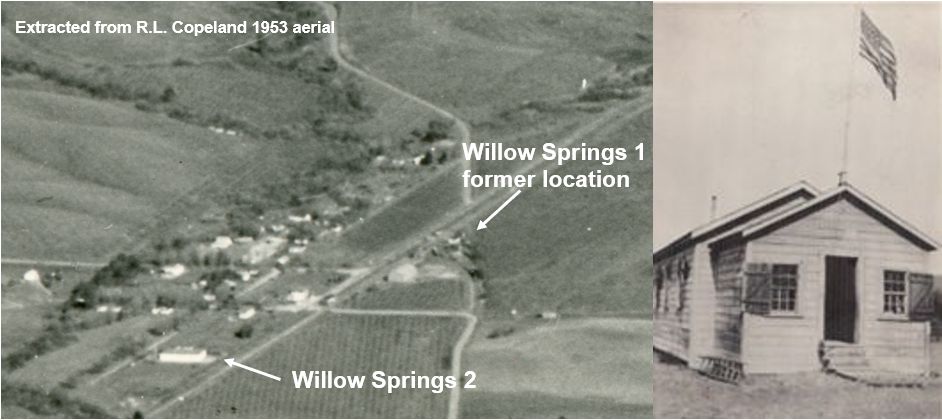
This was typical of rural schools of the time. One teacher taught all the grades in one room. Attendance was affected by the agricultural year, by inclement weather and by frequent lack of teachers. The school day was short as students had farm chores to complete at home. The school year had to work around the planting, pruning, growing, and harvesting seasons.
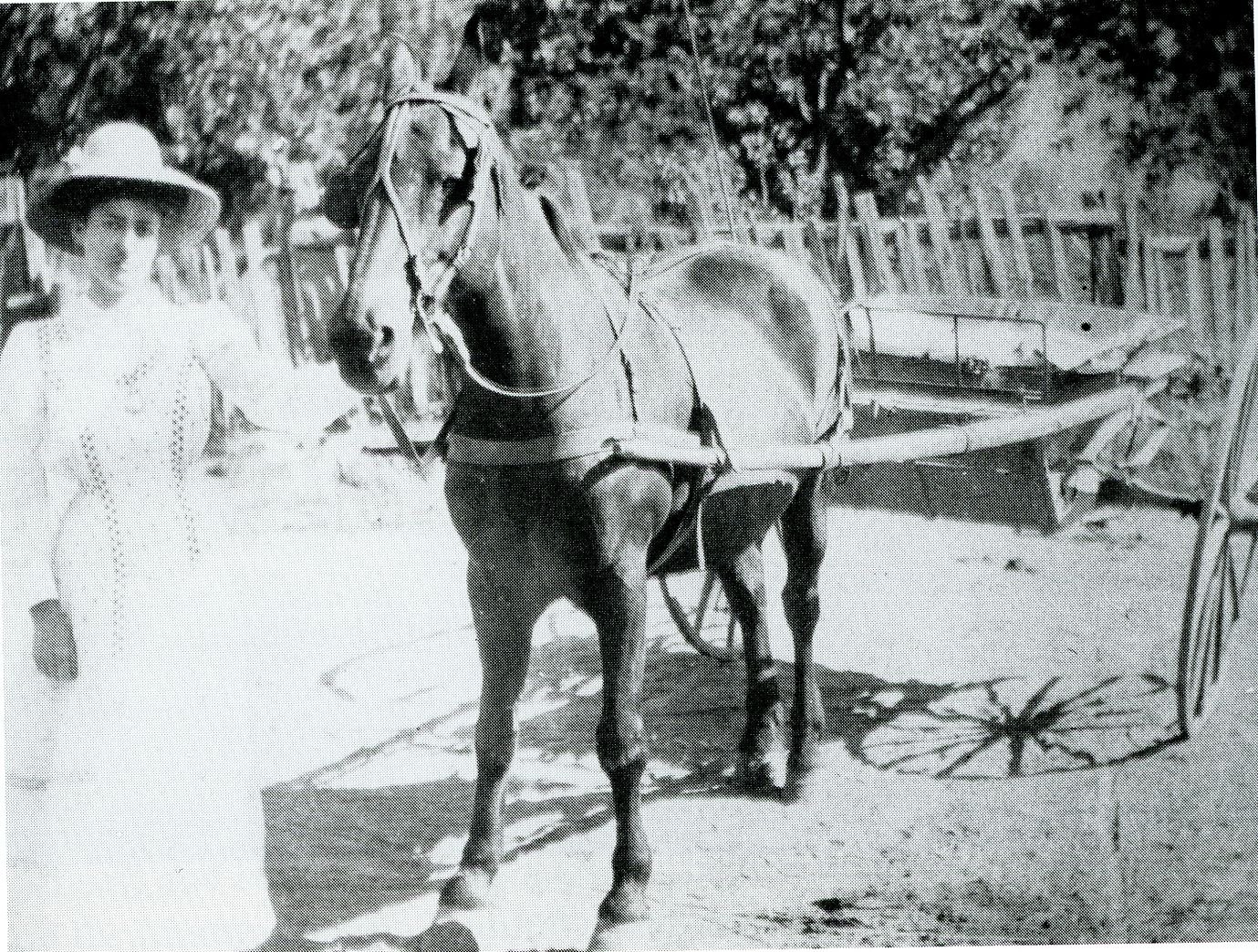
At the turn of the century, Willow Spring finally hired a teacher who stayed for more than a year. Hazel Webb taught from 1906-1909. She was replaced by Florence Fontes who remained at Willow Spring until 1920! Ms Fontes rode to work either in her horse and buggy or on horseback and taught for eleven years at both the old and new Willow Spring schools. Ms Fontes married Matt Madsen, president of the school trustees (grandfather of current Moraga resident Rob Davies).
In 1913 the Oakland, Antioch & Eastern Railway Company put its tracks through the Moraga Valley. The line extended from Oakland to Sacramento. The Moraga Company, expecting a population boom, mapped out a townsite and offered 200 lots for sale. The population explosion did not occur and only one lot sold! It also offered Willow Spring School trustees a 1.5-acre plot of land for $10 in gold coins. Voters approved $12,000 in bonds in April of 1916 and in May of 1917 the new school was completed. Matt Madsen managed to get the lights for the new building from the 1915 San Francisco Exposition fair building, The total cost for the new school was $13,000.
The new Willow Spring School, still in existence today on School Street as the Willow Spring Church, was the latest thing in schoolhouses–two large classrooms, auditorium, cafeteria and kitchen, cloak room, office, and inside bathrooms. There was also a barn for twelve horses ridden to school by the ranch children. In 1917 the new school consisted of two teachers and 45 students (26 boys and 19 girls).
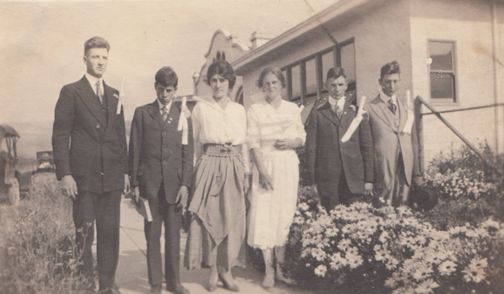
The number of students in the Willow Spring District never exceeded 60 students before 1957. In 1915 the consolidation of Willow Spring and (Moraga) Glorietta schools into a single district was proposed but the proposal was defeated on March 24,1923. This was a time when the population in Orinda on the other side of Tunnel Road was growing so quickly that the Orinda board built a new school. As enrollment declined in the Willow Spring District in 1924, the trustees decided to close Willow Spring School and asked the Orinda School District to annex the area and take the students. Orinda agreed. A series of developments between the Orinda Crossroads and the Moraga townsite were built and students in the new homes attended the Orinda District schools. The Orinda District boundaries eventually reached Ivy Drive. The population of the Willow Spring District remained small.
In 1927 the trustees of the Willow Spring District changed their name to the Moraga School District, feeling the new name would make it more identifiable with the Moraga Valley and the new townsite, changed the Willow Spring School to the Moraga School. In 1940, the Moraga student population had dropped to 18 as the number of farms declined and stayed small until the World War II building boom.
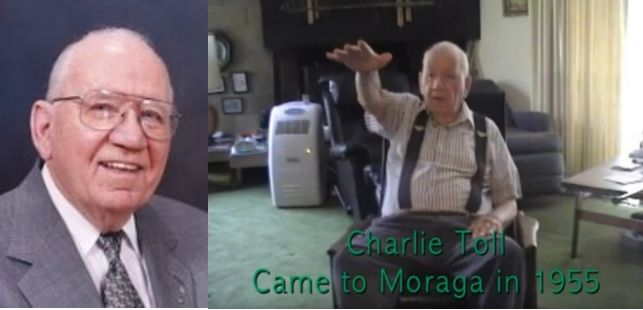
In 1955 Charlie Toll was hired as principal/teacher/janitor of the 50 student Moraga School. Mr. Toll taught 7th and 8th grades. In the beginning of his tenure, Moraga was still a rural community. In 1934 Donald Rheem was developing the site now known as the Hacienda de las Flores. In 1950 Rheem built a shopping center and began building homes in the Rheem Valley.
Mr. Toll was there when Moraga began its population explosion, and he was personally responsible for much of the look of the district today. As enrollment grew, Mr. Toll expanded the two-room Willow Spring/Moraga School by turning the cafeteria into a classroom and dividing the larger rooms. Despite attempts to accommodate the growing number of students, the facility could not be expanded further. The district applied to the state for aid in building a new school. Charlie Toll became the liaison between Moraga and the state. He drove around Moraga counting houses and foundations, and it took three years of counting to qualify for a new school. In 1958, Charlie negotiated with Donald Rheem for the 10-acre site where Donald L. Rheem Elementary School now stands. Donald Rheem School opened in January 1959. The first kindergarten in the district was established in the same year. By the time the first eight classrooms were completed at Donald Rheem School, the primary classes were in double session. The district bought the Camino Pablo site from the Moraga Company and built the school in 1960. Los Perales was built in 1966 to accommodate the overflow, and in 1967 Joaquin Moraga Intermediate School was added. An additional 40-acre site was purchased in the Preston Ranch area on Moraga Road.
Charlie Toll modernized the school program. He introduced classes in instrumental and vocal music, foreign language, modern math, and he assisted in building a library. By 1961 there were 450 students in the Moraga School District. In 1962, William H. Knight was chosen as the district’s first superintendent, and the enrollment grew to 640 students. The climax in student population was reached in 1973 with a total of 2,718 students enrolled and 105 teachers employed by the district. Check out Charlie Toll in Voices of the Past: My Town Moraga – from ranch to town.
When tougher building restrictions, a building moratorium and tighter economic conditions capped the local population, the district began to experience a steady decline in enrollment. Los Perales closed in 1983 (to reopen September 7, 1997) and the Preston Ranch site was sold. By 1986, the number of students in the three schools’ system fell to 1,429 with only 57 teachers remaining. Currently the Moraga School District has 1823 students (JM-660, Rheem-448, LP-373, CP-342) enrolled and 85 teachers.

